
Ceiling Fan Direction in Winter: Does It Really Help With Comfort?
Key Takeaways
- Ceiling fans should generally rotate clockwise at a low speed during winter.
- Winter fan settings help circulate warm air that collects near the ceiling.
- A gentle airflow can improve comfort without creating a strong cooling breeze.
- Running a ceiling fan does not generate heat or replace a heating system.
- Proper mounting, wiring, and controls are important for safe Fan / Chandelier Installation.
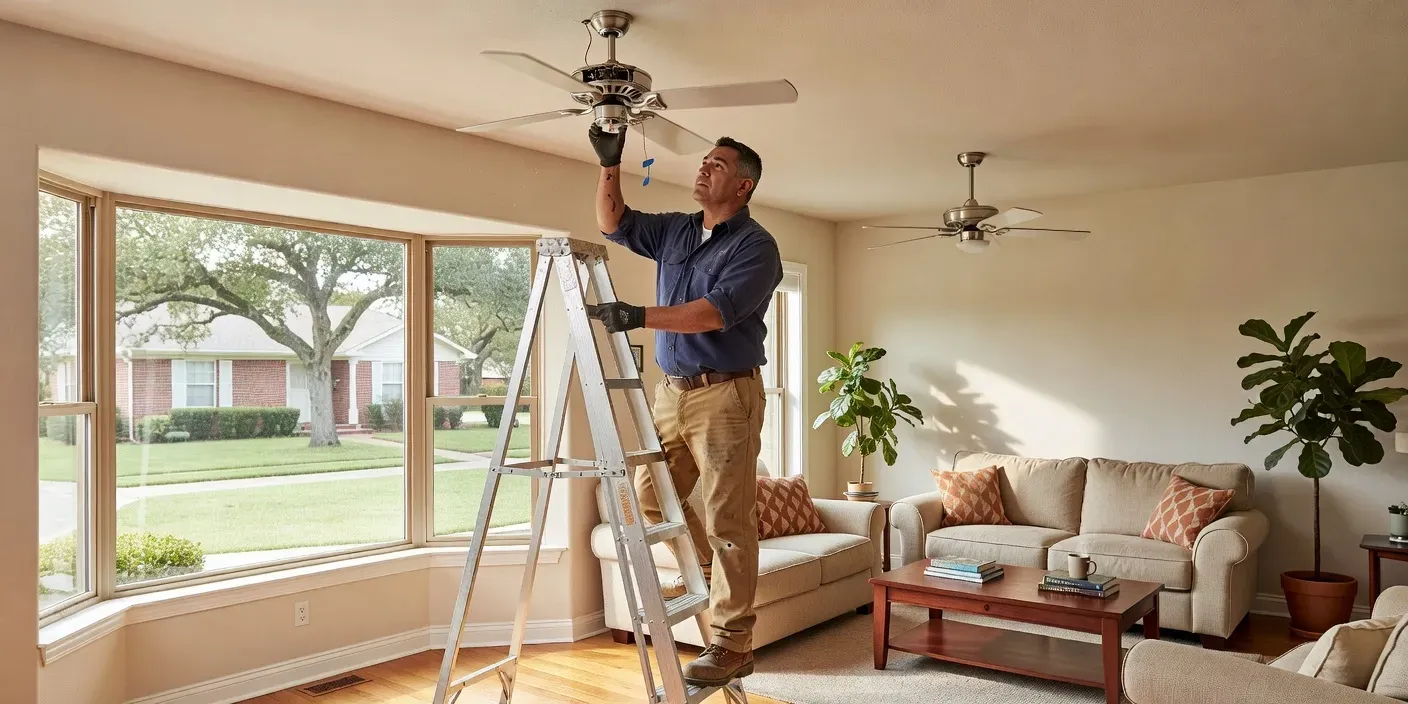
- Professional installation may be needed when replacing a light fixture with a ceiling fan.
Why Does Ceiling Fan Direction Matter During Winter?
Warm air naturally rises because it is less dense than cooler air. In rooms with high ceilings, this can cause warmer air to collect near the upper part of the room while the seating and living areas remain cooler.
A ceiling fan can help mix this air instead of allowing the temperature differences to remain noticeable.
How Does Clockwise Rotation Help?
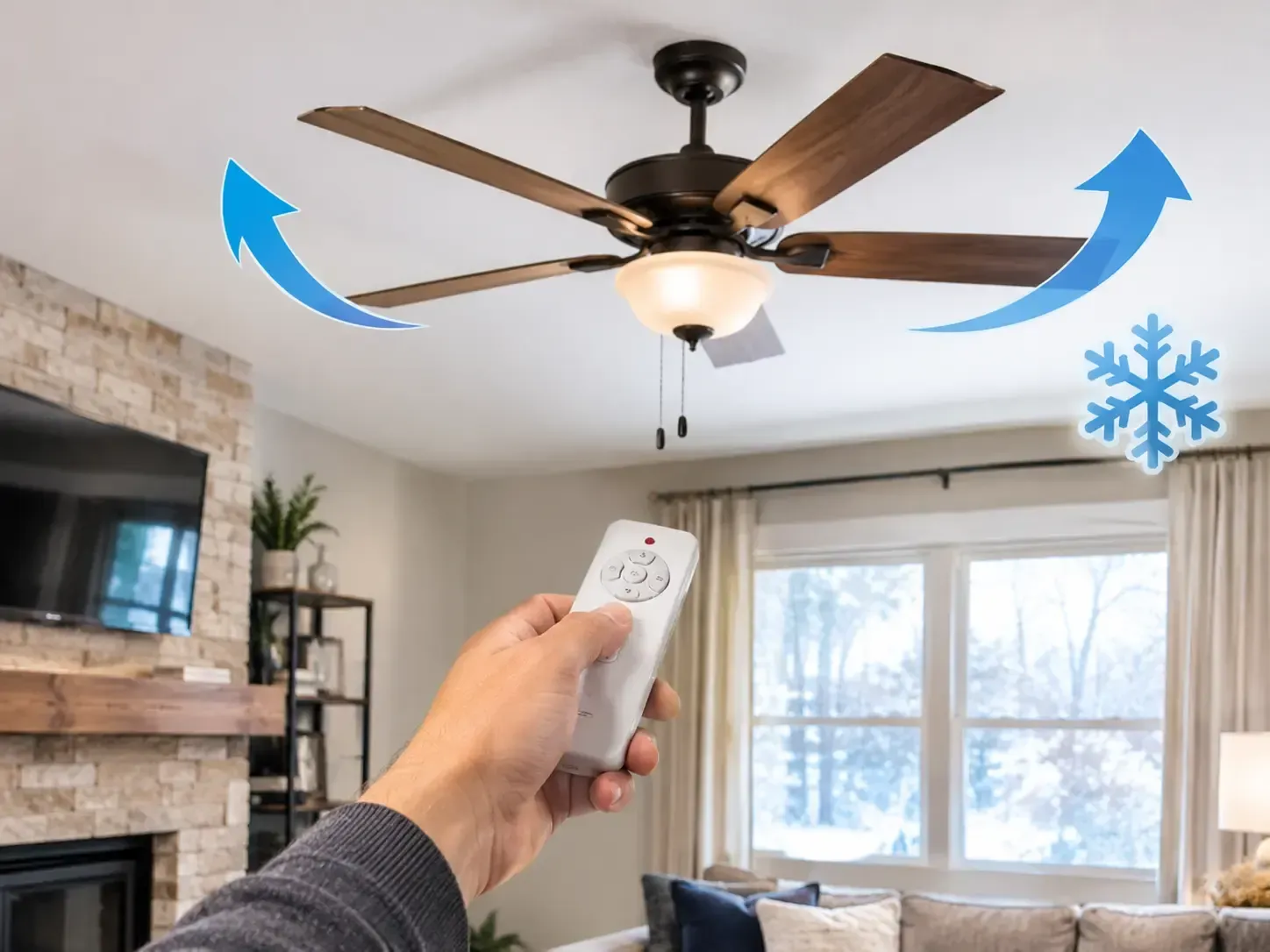
During winter, a ceiling fan should generally rotate clockwise when viewed from below. At a low speed, this setting creates a gentle upward airflow that draws cooler air toward the ceiling and helps move warmer air down along the walls.
The goal is not to create a noticeable breeze. It is to circulate the existing air without making people sitting below the fan feel colder.
For example, a Burleson homeowner with a living room featuring a high ceiling may notice that the upper part of the room feels warmer than the seating area. A properly adjusted fan can help distribute that warmth more evenly.
Does a Winter Fan Setting Actually Save Energy?
It may help some households improve comfort and reduce unnecessary heating adjustments.
When a room feels more evenly heated, homeowners may find they do not need to increase the thermostat as often. However, the actual savings depend on ceiling height, insulation, heating equipment, fan efficiency, and how frequently the fan operates.
A ceiling fan does not produce heat. Its purpose is to improve air circulation.
Clockwise vs. Counterclockwise: Which Direction Should You Use?
Understanding the difference between summer and winter fan settings helps homeowners choose the right direction throughout the year.
| Feature | Winter Setting | Summer Setting |
|---|---|---|
| Rotation | Clockwise | Counterclockwise |
| Fan speed | Low | Medium or high |
| Air movement | Gentle upward airflow | Downward airflow |
| Main purpose | Redistribute warm air | Create a cooling breeze |
| Comfort effect | Helps reduce temperature differences | Makes people feel cooler |
How Can You Check Your Ceiling Fan Direction?
Most ceiling fans have a small reverse switch on the motor housing. Some newer models use a remote control or wall control to change direction.
Follow these steps:
- Turn off the ceiling fan completely.
- Wait until the blades stop moving.
- Locate the reverse switch or check the manufacturer's instructions.
- Change the direction to clockwise when viewed from below.
- Turn the fan back on at its lowest setting.
- Check whether the airflow feels gentle rather than drafty.
If your fan uses electronic controls, follow the manufacturer's instructions instead of assuming it has a manual switch.
Which Rooms Benefit Most From Winter Ceiling Fan Use?
Not every room needs the same fan setting or operating schedule. Room size, ceiling height, insulation, and heating arrangements all affect how useful winter circulation may be.
Living Rooms With High Ceilings
High ceilings allow warm air to collect well above the occupied space. A properly sized ceiling fan can help redistribute that warmth.
Homeowners should also consider blade size and fan placement. A fan that is too small for a large room may not circulate air effectively.
Bedrooms
Bedrooms can benefit from gentle air circulation, particularly when warm air collects near the ceiling.
However, some people are sensitive to airflow while sleeping. If the fan makes the room feel uncomfortable, reduce its speed or turn it off.
Open Living and Dining Areas
Open floor plans can have uneven temperatures because of their larger air volume and different ceiling heights.
A properly positioned fan may help improve circulation, but multiple fans may be more appropriate for larger spaces.
Rooms With Vaulted Ceilings
Vaulted ceilings can make temperature differences more noticeable. These installations may also require longer downrods, specialized mounting hardware, and careful attention to blade clearance.
Professional Fan / Chandelier Installation helps ensure that the selected fan is properly supported and positioned.
What Should You Check Before Changing Your Fan Direction?
Changing the direction is usually a simple adjustment, but homeowners should also consider the fan's overall condition.
A few checks can help identify problems before they become more serious.
1. Check for Wobbling
A ceiling fan should operate smoothly. Excessive movement may indicate unbalanced blades, loose hardware, or an improperly secured mounting bracket.
2. Listen for Unusual Sounds
Rattling, humming, or clicking noises may point to loose components, motor problems, or electrical concerns.
3. Check the Fan Controls
Some fans have separate controls for lighting and motor speed. Make sure the switches, remotes, and wall controls respond correctly.
4. Inspect the Mounting Support
Ceiling fans need electrical boxes and mounting systems rated to support fan movement and weight. A standard light fixture box should not automatically be assumed suitable for a ceiling fan.
5. Consider the Fan's Age
Older fans may have worn components, outdated controls, or installation issues. If the fan struggles to operate at different speeds, a professional inspection may be worthwhile.
When Should You Consider Professional Fan / Chandelier Installation?
Changing the direction of an existing fan does not normally require an electrician. However, installation and replacement involve additional electrical and structural considerations.
Professional service may be appropriate in several situations.
Replacing a Light Fixture With a Ceiling Fan
A decorative ceiling light and a ceiling fan have different mounting requirements. Before replacing a chandelier or light fixture, the electrician should verify that the electrical box and ceiling support can handle the fan's weight and movement.
Installing a Fan on a High Ceiling
Vaulted ceilings and two-story rooms may require specialized mounting hardware, appropriate downrod lengths, and safe access equipment.
Adding Separate Fan and Light Controls
Some homeowners prefer independent controls for the fan motor and its lighting. Depending on the existing wiring, this may require additional electrical work.
Upgrading an Older Ceiling Fan
If an existing fan has persistent noise, poor operation, damaged wiring, or loose mounting hardware, replacing it may be a better option than continuing to use a problematic fixture.
Improve Your Home's Comfort With Professional Electrical Service
Changing your ceiling fan direction during winter is a simple adjustment that may improve indoor comfort, especially in rooms with high ceilings. Using clockwise rotation at a low speed helps circulate warm air without creating the cooling breeze associated with summer operation.
However, proper fan performance also depends on the fixture's condition, mounting support, wiring, and controls. If you are replacing an older fan, upgrading a light fixture, or planning a new installation, professional electrical work can help ensure everything operates safely.
Burleson A.T. Electric provides residential electrical services for homeowners in Burleson and nearby communities.
With more than 25 years of hands-on experience, the team handles ceiling fan installations, fixture replacements, wiring, mounting, and electrical upgrades.
Explore professional Fan Installation services to learn more about improving your home's comfort and airflow.
Ready to upgrade a ceiling fan or replace an outdated chandelier? Call 682-343-8629 or contact Burleson A.T. Electric to discuss your electrical installation needs.
Frequently Asked Questions
Should a ceiling fan run clockwise in winter?
Yes. Most ceiling fans should rotate clockwise at a low speed during winter when viewed from below. This helps move warm air collected near the ceiling back into the occupied part of the room without creating a strong breeze.
Should I leave my ceiling fan running all day in winter?
Not necessarily. Run it when air circulation improves comfort in the room. Turn it off when the room is unoccupied or when the airflow creates discomfort.
Does changing ceiling fan direction make a room warmer?
It does not create additional heat. Instead, clockwise rotation at a low speed helps redistribute warm air that has collected near the ceiling, which may make the room feel more comfortable.