
Dimmer Switch Compatibility: Why Some LED Lights Flicker or Buzz
LED flicker or buzz on a dimmer usually means the switch, bulb, and load type are mismatched—not a random defect. For Burleson, Texas homes, Burleson A.T. Electric helps owners compare trailing-edge vs leading-edge controls, check minimum load, and plan safer Indoor Lighting upgrades before swapping parts at random.
Key takeaways
- Match LED bulbs to dimmers labeled LED-compatible or trailing-edge.
- Undersized loads and mixed bulb brands often cause buzz or shimmer.
- Old leading-edge (TRIAC) switches struggle with many low-watt LEDs.
- Confirm multi-gang, 3-way, and neutral needs before you buy hardware.
Why do some LED lights flicker or buzz on dimmers?
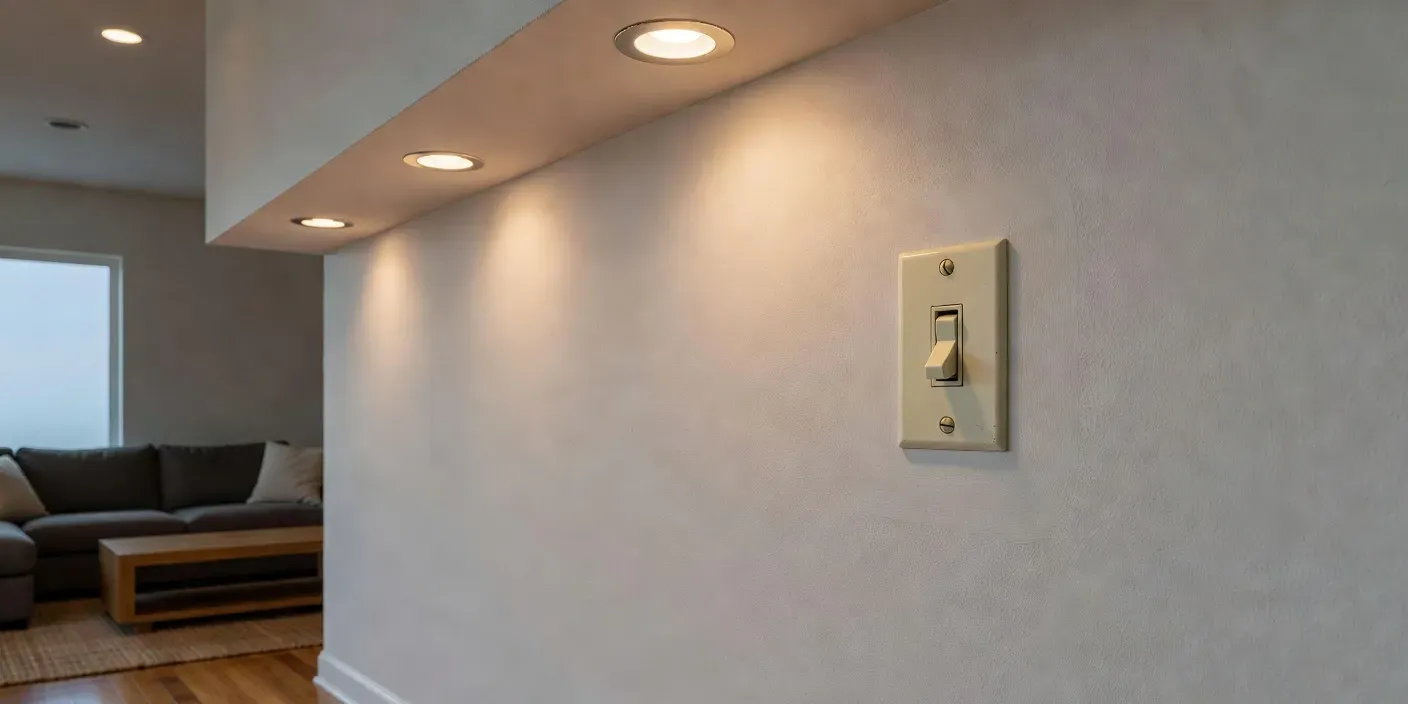
Flicker and buzz happen when the dimmer’s chopping method, minimum wattage, and the LED driver’s electronics disagree, so the lamp gets unstable power instead of a smooth reduced level. In many Burleson houses, older switches built for incandescent loads starve low-watt LEDs or create audible coil noise. Compare dimmer type, bulb “dimmable” rating, circuit load, and 3-way wiring as your decision criteria, then contact a local electrician if testing still fails.
Which dimmer type works better for LED indoor lighting?
Trailing-edge (ELV) dimmers usually suit modern LED indoor lighting better than leading-edge (TRIAC) units because they soft-switch low-watt drivers, cut buzz, and hold steadier low levels when the circuit meets the switch’s minimum load. In Burleson, Texas homes still wired for old incandescents, choosing the wrong edge type is a top reason lamps shimmer after a bulb-only swap. Use dimmer class, load range, multi-gang derating, and 3-way or neutral needs as your decision criteria before you buy.
| Option | Best for | Watch-out | Burleson home tip |
|---|---|---|---|
| Leading-edge (TRIAC) | Legacy incandescent or high halogen loads | Often buzzes or flickers with low-watt LEDs | Retire when rooms go all-LED |
| Trailing-edge (ELV) | Most dimmable LED lamps and fixtures | Needs correct load floor and wiring | Prefer for living rooms and halls |
| LED-rated universal | Mixed retrofit bulbs on one control | Still fails if brands fight each other | Match one bulb line per dimmer |
| Smart Wi-Fi/Zigbee dimmer | App scenes and voice with LEDs | Neutral, hub, and gang space matter | Plan panel and box depth first |
Keep total lamp watts above the dimmer’s stated minimum and avoid mixing non-dimmable bulbs on the same control. If multi-gang boxes share a yoke, derate capacity so heat does not worsen flicker. When the switch, driver, and layout still disagree, schedule a walk-through rather than stacking random parts—local diagnostics beat guesswork on older Burleson circuits.
Which Dimmer and Bulb Pairing Should Burleson Homeowners Choose?
Choose trailing-edge or LED-rated dimmers with one matched dimmable lamp line, keep total load above the switch minimum, and confirm neutral or multi-gang space before you buy so Indoor Lighting stays steady instead of flickering or buzzing on older Burleson, Texas circuits still sized for incandescent heat and higher wattage.
Leading-edge controls often remain on legacy walls. They can work with a few high-watt LEDs, yet low-draw cans and lamps usually shimmer or hum. Trailing-edge units smooth the waveform for modern drivers and suit living rooms, halls, and kitchens after a full LED swap.
Universal LED dimmers help mixed retrofits on one yoke. Still pair one bulb brand and series per control so drivers do not fight each other. Smart Wi-Fi or Zigbee models add scenes, but they need neutral, hub planning, and box depth common in tighter Burleson multi-gang plates.
Decision criteria stay simple: dimmer class, minimum and maximum load, derating in shared gangs, three-way needs, and neutral availability. When Indoor Lighting still buzzes after a careful match, Burleson A.T. Electric can inspect drivers, wiring, and layout on site.
For fixture upgrades, dimmer swaps, or whole-room indoor lighting coordination, contact the team to schedule a local walk-through and lock the right parts before another bulb-only trial.
Leading-edge versus trailing-edge for LED loads
Choose trailing-edge or listed LED dimmers when most fixtures draw under 10 watts each, because leading-edge chop often leaves low-load drivers unstable and noisy on typical Burleson, Texas branch circuits. Match published minimum load, maximum LED wattage, and multi-gang derating so shared yokes do not overheat or drop range. Keep one lamp family per control whenever possible.
Three-way and four-way runs need companion or smart kits rated for the same class. Box fill and depth matter in older multi-gang plates common around Burleson homes. Smart scenes add convenience only after neutrals, hubs, and heat limits are confirmed.
When Indoor Lighting still flickers after matching class and load, stop swapping bulbs and verify wiring, shared neutrals, and fixture drivers together.
Frequently Asked Questions
Why do some LED bulbs flicker on older dimmers in Burleson homes?
Older leading-edge dimmers expect higher wattage heat loads, so low-draw LED drivers receive choppy power and pulse. Minimum-load ratings go unmet on cans and lamps. Trailing-edge or LED-listed controls plus one bulb series per switch usually restore smooth Indoor Lighting without buzz.
What load rating should I check before buying a dimmer?
Read both the dimmer’s minimum load and its maximum LED wattage, then derate for multi-gang boxes. Sum fixture watts on that control, not the old incandescent number. Staying inside those limits prevents shimmer, hum, and early failure on Burleson, Texas circuits sized for legacy lamps.
Why do some dimmable LEDs still flicker on a new dimmer?
Flicker usually means the dimmer’s low-end curve or minimum load sits below what the LED driver needs, or mixed bulbs share one control.
Preferred Source on Google Search
Add www.burlesonatelectric.com to customize your search feed across Top Stories.