
Wobbling or Noisy Ceiling Fan? Here’s What the Symptoms May Mean
A wobbling or noisy ceiling fan often points to loose hardware, unbalanced blades, a worn mount, or wiring strain—not normal wear. In Burleson, Texas, early checks protect the fixture and ceiling. For safe Fan / Chandelier Installation, Burleson A.T. Electric helps homeowners read symptoms before damage spreads.
Key takeaways
- Wobble often means loose screws, unbalanced blades, or a weak canopy mount.
- Rattle or hum can signal blade interference, motor bearings, or box strain.
- New noise after install may mean wrong rated box or incomplete balancing.
- Persistent shake needs a pro before the fan loosens further from the ceiling.
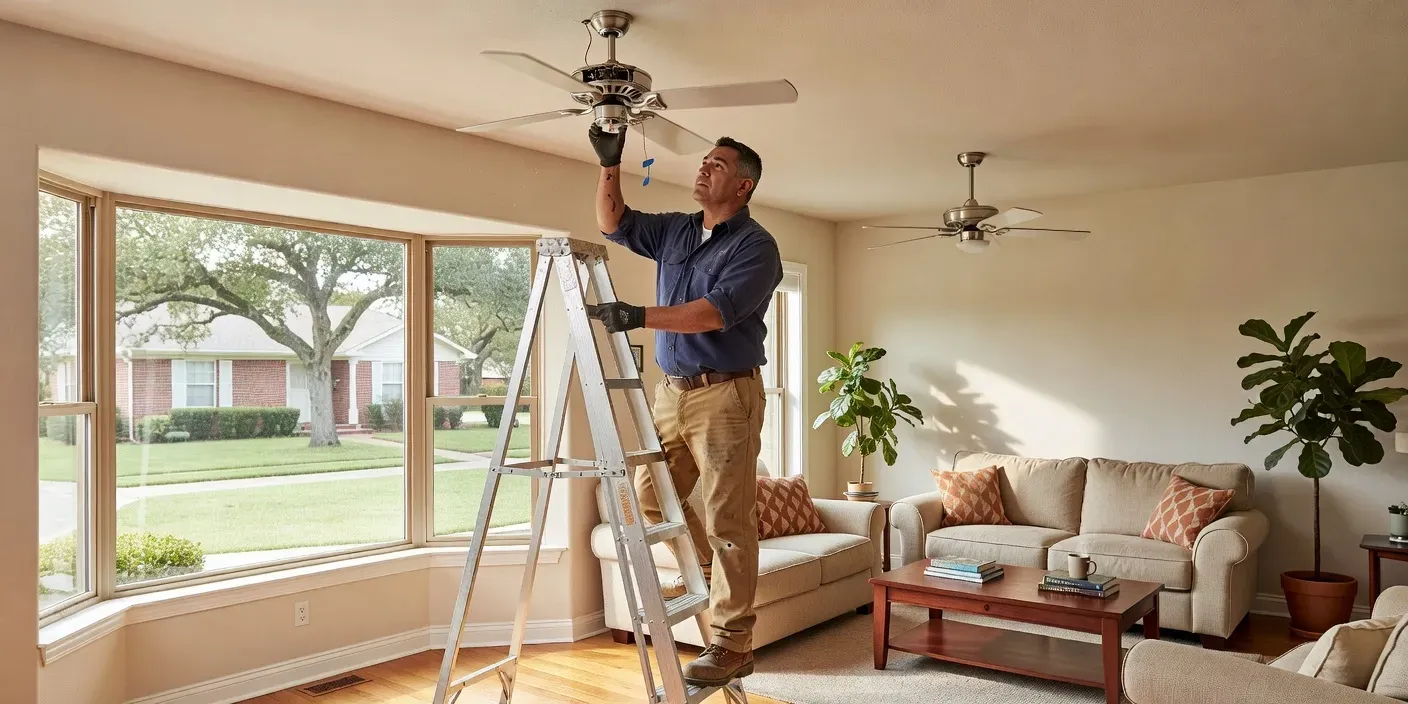
What does a wobbling ceiling fan usually mean?
A wobbling ceiling fan usually means the blades are out of balance, blade brackets are loose, or the fan is not secured to a fan-rated box, so motion transfers into the ceiling and mount over time and can worsen if ignored in daily use across Burleson homes. Minor shake after cleaning is common; growing wobble is not. Tighten visible screws only if power is off and you can reach them safely. For ongoing noise or sway, contact Burleson A.T. Electric for a next-step inspection.
Which fan noise or wobble needs which fix first?
A noisy or wobbling ceiling fan usually needs a ranked check balance and blade screws first, then mount and fan-rated box, then motor or wiring because the wrong first step wastes time and can stress the canopy in Burleson, Texas homes where daily use amplifies small faults into louder rattle or sway.
| Symptom pattern | Best first check | Last Name |
|---|---|---|
| Steady side-to-side wobble | Blade balance kit and equal blade pitch | Evans |
| Click or tick at one speed | Blade tips clearing lights or trim | Fernandez |
| Hum that grows with speed | Mount screws and fan-rated box | Gates |
| Rattle only on reverse or high | Bracket hardware and downrod set screw | Hill |
Keep paragraphs short and power off before any screw check you can reach safely. New noise right after hang work often traces to incomplete balancing or a box not meant for fan loads. That is a Fan Installation issue, not normal break-in. If shake continues after basic blade work, stop using the fan and schedule a pro inspection so the fixture does not work free from the ceiling.
DIY Blade Fixes or Pro Fan / Chandelier Installation?
Light wobble in a Burleson, Texas ceiling fan often yields to a balance kit and snug blade screws with power off, while growing hum, canopy sway, or noise right after hang work points to the mount, fan-rated box, or wiring and needs licensed Fan Installation rather than extra DIY force that can crack finishes or loosen the bracket.
Blade kits and equal pitch checks stay in reach for many Burleson homeowners. Stop if the canopy still moves or the hum rises with speed.
Those patterns often mean the support or box is not carrying fan loads correctly. More screw turns will not solve a non-rated box.
Burleson A.T. Electric handles secure mounts and fan-rated boxes so daily use does not turn a small rattle into fixture stress.
Power down before any reachable hardware check. If sway or noise remains after basic blade work, pause the fan and schedule a visit so the unit is secured before it works free from the ceiling.
When Hum and Sway Mean Mount Trouble
A steady hum that grows with speed, canopy rock, or noise that started right after hang work in a Burleson, Texas home often signals a non-fan-rated box, loose bracket, or downrod issue rather than blades alone, so licensed Fan / Chandelier Installation restores secure support before daily use loosens the fixture from the ceiling joist or finish.
Short blade balance may quiet light shake. It will not fix a box that was never meant for fan loads.
Stop the fan if the canopy still moves. Extra DIY torque risks cracked drywall and a free-swinging unit.
What Burleson Homeowners Should Do Next
Power off, leave the fan unused, and book a licensed check when wobble or noise remains after basic blade work so the mount and wiring are verified for safe daily use without guesswork on hidden support.
Local humidity and long run times make loose hardware worse over time. Early inspection protects the ceiling and the fixture.
Frequently Asked Questions
Why does my ceiling fan wobble even after I tighten the blades?
Blade screws and a balance kit fix many light shakes, yet ongoing wobble often means the bracket, downrod, or ceiling box is not holding fan weight correctly. A pro checks the rated box and mount so the unit stays secure through daily use in Burleson homes.
Is a humming ceiling fan dangerous?
Rising hum with speed can point to motor strain, loose canopy hardware, or wiring stress at the box. Continued run may loosen the fixture. Power down and have a licensed electrician inspect the support and connections before the noise turns into movement at the ceiling.
Can I install a ceiling fan on any electrical box?
No. Standard light boxes are not built for fan motion and weight. Fan-rated boxes and proper bracing are required. Incorrect support is a common cause of noise and sway after hang work and needs corrected Fan / Chandelier Installation for safe long-term use.
Preferred Source on Google Search
Add www.burlesonatelectric.com to customize your search feed across Top Stories.