
Don't Get Hung Up: 5 Common Ceiling Fan Installation Mistakes to Avoid
A ceiling fan is a fantastic addition to any Texas home, offering a cool breeze on hot summer days and helping to circulate warm air during our milder winters. While installing a ceiling fan might seem like a straightforward DIY project, it's a task that's surprisingly easy to get wrong. An improper installation can lead to annoying wobbles, strange noises, or even serious safety hazards like electrical fires or the fan detaching from the ceiling. At
Burleson A.T. Electric, we've seen our fair share of DIY installations gone wrong. That's why we've put together this guide to the most common mistakes and how a licensed electrician ensures a safe and secure installation.
1. Using the Wrong Electrical Box
This is perhaps the most critical and common mistake. A standard electrical box designed for a light fixture is not built to handle the weight and constant vibration of a ceiling fan. Over time, the movement can cause the box to loosen, leading to a wobbly fan or, in the worst-case scenario, the entire unit crashing down.
How Electricians Avoid This: A licensed electrician will always install a UL-listed, fan-rated electrical box. These boxes are specifically designed to be securely fastened to a ceiling joist or a brace between joists, providing the necessary support to handle the fan's weight and motion safely.
2. Incorrect and Unsafe Wiring
Faulty wiring is a significant fire hazard. Common DIY wiring mistakes include loose connections, using the wrong size wire nuts, or mismatching wires, especially in older homes with outdated wiring. These errors can lead to short circuits, overheating, and potentially devastating electrical fires. Signs of improper wiring can include a burning smell, flickering lights on the fan, or a fan that doesn't operate on all speeds.
How Electricians Avoid This: Professionals have the expertise to navigate complex wiring safely. They understand electrical codes and ensure all connections are secure, properly grounded, and compliant with local regulations. Here at Burleson A.T. Electric, our electricians ensure every installation is up to code, giving you peace of mind.
3. Forgetting to Balance the Blades
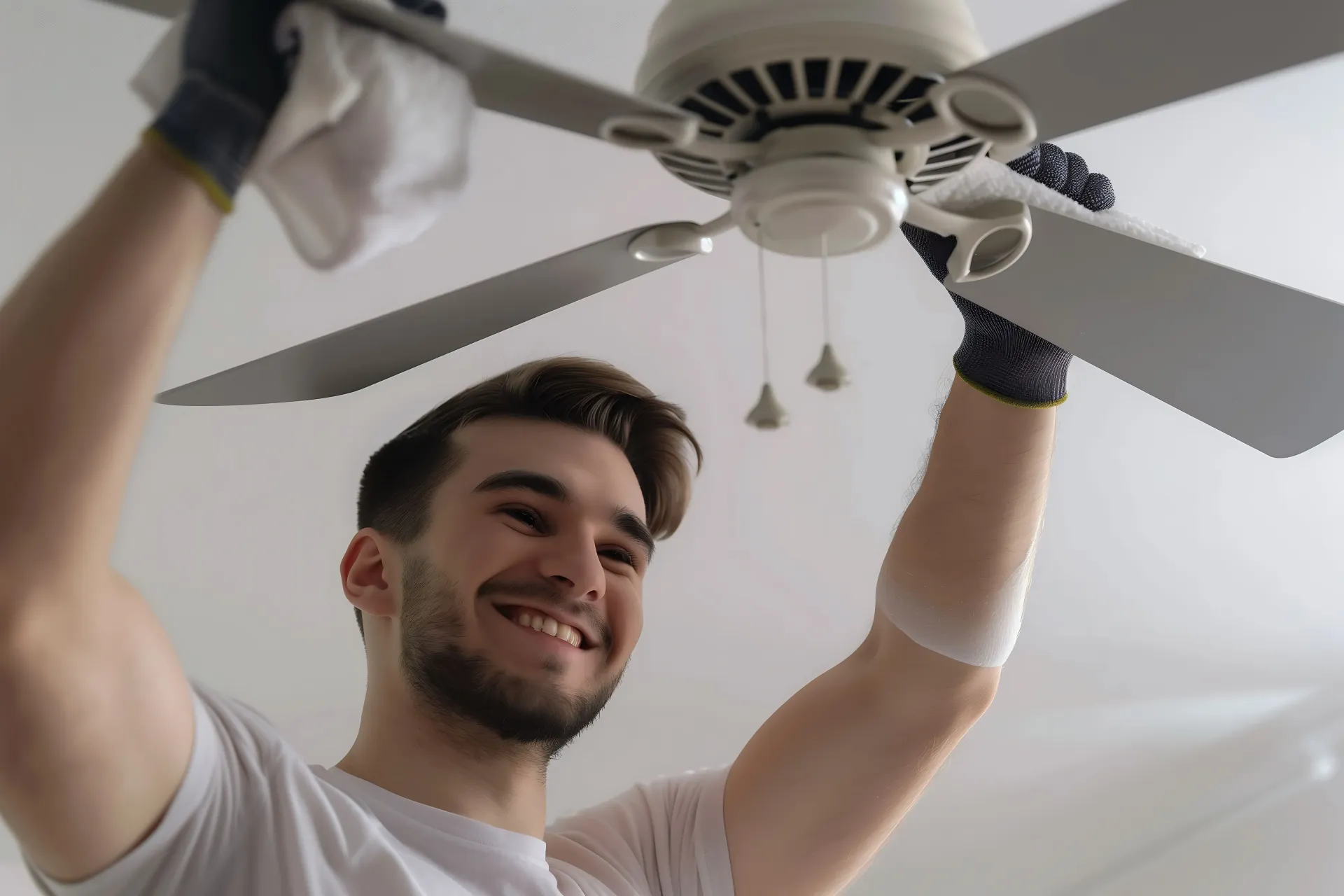
A wobbly ceiling fan isn't just distracting; it's a sign of an unbalanced installation. This constant wobbling puts unnecessary strain on the motor and mounting hardware, which can shorten the fan's lifespan and lead to mechanical failure. While a slight wobble can sometimes be fixed by tightening loose screws, it often points to imbalanced blades.
How Electricians Avoid This: Professional installation includes a crucial final step: balancing the fan blades. Electricians use a balancing kit, which includes clips and weights, to make precise adjustments. They systematically test each blade to identify the source of the imbalance and apply counterweights to ensure smooth, quiet, and wobble-free operation.
4. Ignoring Ceiling Height and Fan Size
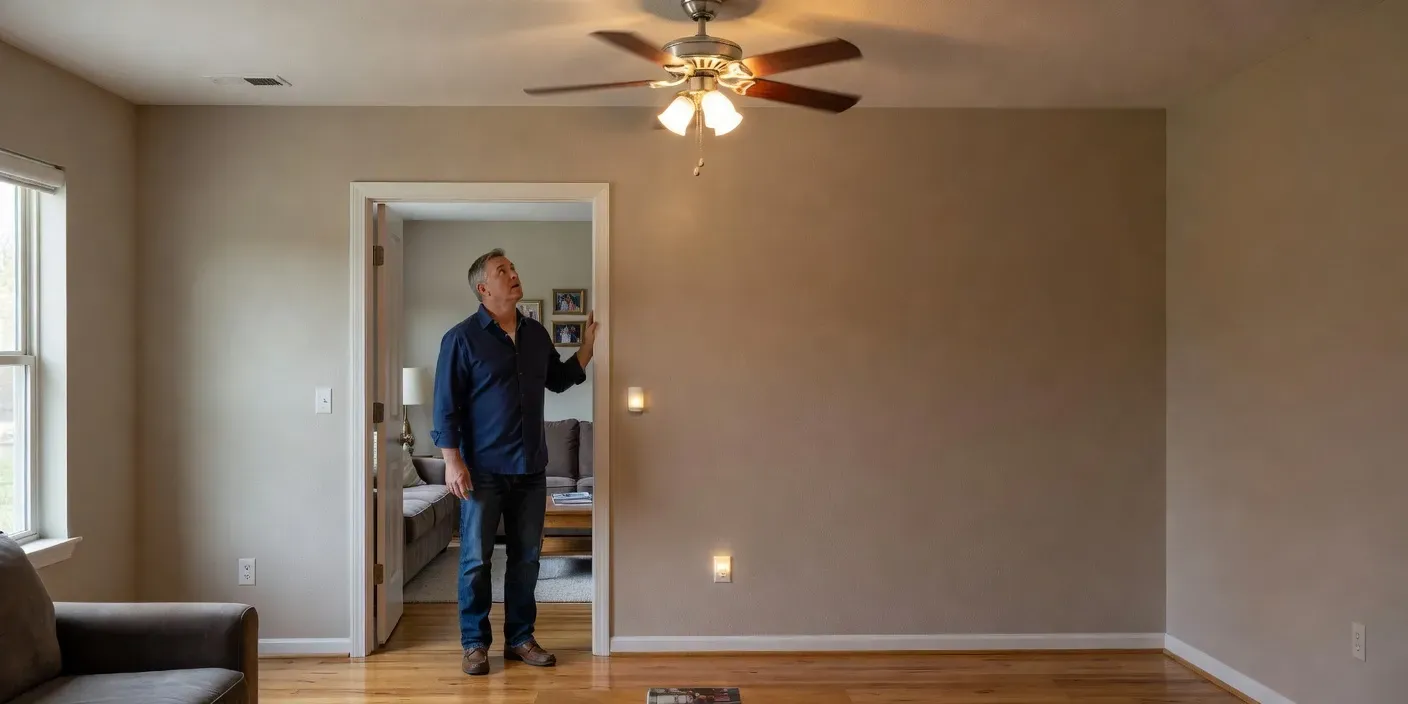
Not all fans are suitable for all rooms. Installing a fan that is too large for a small room can create an overwhelming amount of airflow, while a fan that's too small won't be effective. More importantly, ceiling height is a critical safety factor. For optimal airflow and safety, fan blades should be between 8 and 9 feet from the floor. Hanging a fan too low creates a safety hazard, while hanging it too high in a room with vaulted ceilings reduces its effectiveness.
How Electricians Avoid This: An experienced electrician can recommend the appropriate fan size for your room's square footage. They will also use the correct length downrod to hang the fan at the optimal height, ensuring both safety and efficient air circulation, even in rooms with high or sloped ceilings.
5. Inadequate Mounting and Assembly
Rushing through the assembly or not securing all components properly can lead to a host of problems. Loose screws on the blades, for example, can cause rattling noises and may eventually lead to a blade detaching. Furthermore, if the mounting bracket itself isn't securely fastened to the fan-rated box, the entire fan can be unstable.
How Electricians Avoid This: An electrician follows the manufacturer's instructions to the letter, ensuring every screw, bolt, and pin is properly tightened. They take the time to assemble the fan correctly before hanging it and double-check that all mounting hardware is secure. This meticulous approach guarantees the fan operates safely and lasts for years to come.
Protect Your Home and Family: Trust the Professionals
While a DIY project can be satisfying, the risks associated with improper ceiling fan installation are too significant to ignore. Hiring a licensed electrician ensures the job is done safely, correctly, and in compliance with all electrical codes. For a professional and worry-free ceiling fan installation in the Burleson, TX area, trust the experts at Burleson A.T. Electric. Your safety is our top priority.
Ready for a new ceiling fan? Contact Burleson A.T. Electric today at (682) 343 8629 for a safe and professional installation!
Frequently Asked Questions
Can I install a ceiling fan where a light fixture used to be?
Yes, but it's crucial to replace the existing electrical box with one that is specifically rated to support the weight and motion of a ceiling fan. A standard light fixture box is not strong enough and can lead to the fan falling.
Why is my new ceiling fan wobbling?
A wobbling fan is most often caused by imbalanced blades. It can also be due to loose screws on the blades or mounting bracket, or the fan being installed on an electrical box that isn't fan-rated. A professional can diagnose the issue and properly balance the fan.
How long does it take a professional to install a ceiling fan?
For a straightforward installation where wiring is already in place, a licensed electrician can typically install a ceiling fan in about 1 to 2 hours. If new wiring or a new support brace is needed, the installation may take longer.